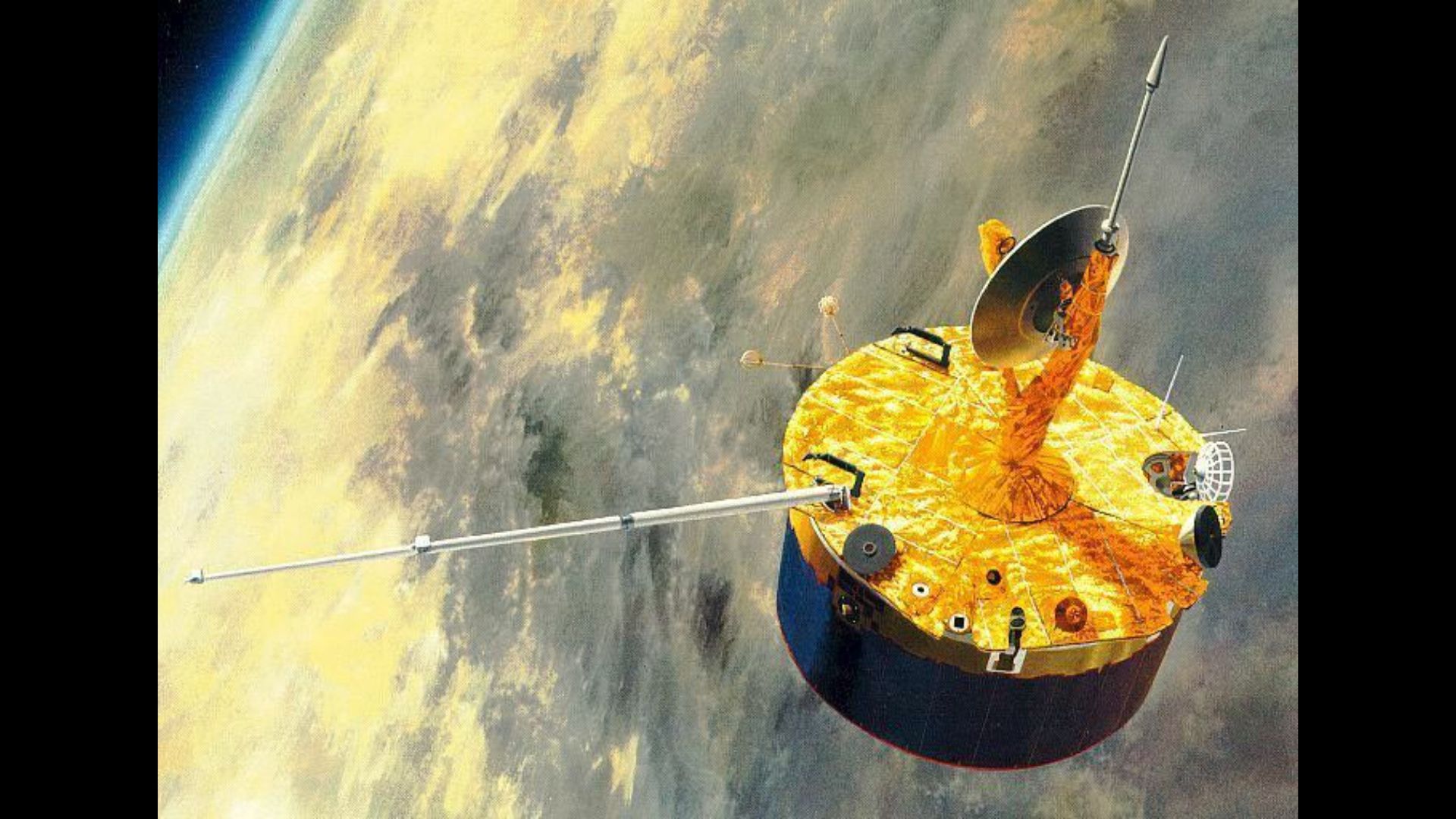
On Oct. 8, 1992, NASA's Pioneer 12 spacecraft burned up in the atmosphere of Venus.
Pioneer 12, also known as the Pioneer Venus Orbiter, spent 14 years orbiting Venus and studying the planet's atmosphere. It also investigated how the planet's ionosphere and magnetic field interact with charged particles from the sun called solar wind.
Pioneer 12 even got to check out Halley's Comet while it was in orbit around Venus.
When Pioneer 12 ran out of propellant, its orbit naturally started to decay, and it disintegrated in Venus's atmosphere.
Why it matters
Pioneer 12, also known at NASA as Pioneer Venus or Pioneer Venus 1 mission, was the first-ever American spacecraft to enter orbit around Venus. It launched on May 20, 1978 and arrived in orbit around Venus on Dec. 4 of that year.
The mission was part of a tag-team flight to Venus (a second probe, Pioneer Venus 2, would launch in August 1978), but as its name suggests, Pioneer Venus 1 was first, launching on an Atlas Centaur rocket from Launch Complex 36A at Cape Canaveral, Florida.
PIoneer Venus 1 carried 16 different instruments to study Venus from an orbit of about 99 miles (160 kilometers), with the probe taking just over 23 hours to circle the planet, according to a NASA overview.
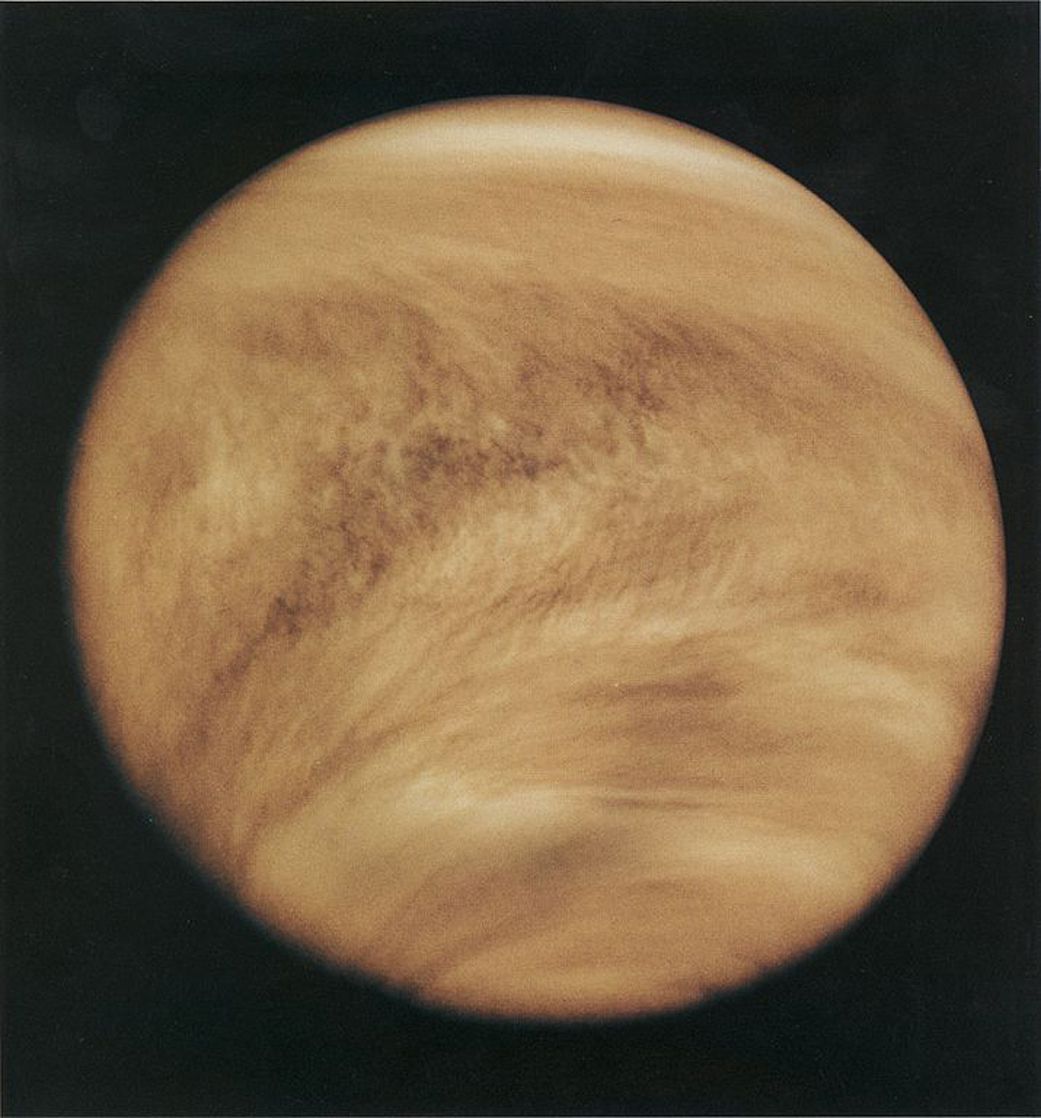
The probe's instruments mapped most of the surface of Venus between the latitudes of 73 degrees north and 63 degrees south, at a resolution of 47 miles (75 km). Its data revealed a planet much rounder and smoother than Earth, with its highest point - called Maxwell Montes - rising 6.5 miles (10.8 km) above the surface. It had a peak higher than Mt. Everest and a canyon deeper than the Grand Canyon on Earth, NASA said.
"Cameras also detected almost continuous lightning in the atmosphere. The spacecraft confirmed that Venus has little if any magnetic field," NASA wrote.
By March 19, 1981, Pioneer Venus had mapped 93% of the area within sight of its instruments, so NASA switched its mapping radar off. But in 1991, the probe could then see new parts of the southern Venus area, leading NASA to reactivate the mapping radar a full 13 years after launch to glean more data from the probe.
Halley's Comet was also not the only comet Pioneer Venus observed. The probe managed to study comets Encke in 1984, Giacobini-Zinner in 1985, comet Wilson in 1987, and comets NTT and McNaught (both in 1987).
Want more space history? Check out our full On This Day In Space Story archive and watch our On This Day In Space videos on YouTube.