Summary
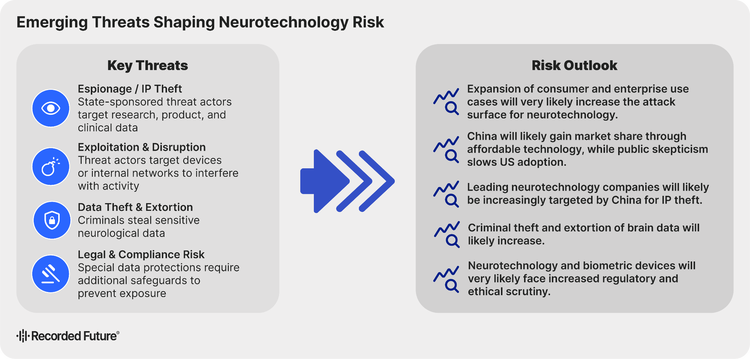
Neurotechnology is rapidly moving beyond clinical use cases, expanding the attack surface for sensitive neurological and biometric data: As adoption grows, larger volumes of brain activity, biometric, and behavioral data will be collected by commercial platforms, creating new opportunities for data theft, misuse, and exploitation.
China and the United States (US) are engaged in strategic competition in neurotechnology development: The US leads in the number of neurotechnology firms, and brain-computer interface (BCI) research has been a long-term research priority for the US military. At the same time, China’s five-year guidance for BCI development, subsidies for major wearable technology firms, and military research into human-machine integration suggest that neurotechnology is a strategic priority.
Leading neurotechnology companies are likely to face increased targeting for intellectual property (IP) theft: Because neurotechnology is costly to develop and strategically valuable, companies in this sector are likely to become attractive targets for state-sponsored espionage, insider threats, and cyber-enabled theft. Successful IP theft could erode the competitive advantage of companies that invest heavily in research and development (R&D). Military and higher education research laboratories are also likely to be targeted for access to R&D and related data.
Neurological and biometric data will become an increasingly valuable target for cybercriminals and state-linked actors: Attackers may seek to exfiltrate these datasets for extortion, surveillance, strategic intelligence, or model development. The sensitivity of this data could make breaches particularly damaging for affected individuals and companies, making it an attractive target for extortion-focused cybercriminals.
Regulatory and national security scrutiny of neurological data will likely intensify: Existing privacy frameworks in the European Union (EU) and several US states already provide heightened protections for neurological or biometric data, but rapid advances in neurotechnology may outpace consumer protection laws.
Source: RecordedFuture
Source Link: https://www.recordedfuture.com/research/emerging-threats-neurotechnology