MORRISON, Colorado - The Artemis II crew that circuited the moon earlier this year came full circle, dropping by a distinctive spot on Earth that's visually reminiscent of both the moon and Mars.
On Aug. 3, the vast and stunning Red Rocks Amphitheatre served as both an inoculation of near-term nostalgia and heart-felt congratulations to the crew for the impressive journey of Artemis II. The 10-day mission began on April 1 of this year, flew around the moon and back, and splashed down in the Pacific Ocean on April 10. It was the first crewed flight to saunter spaceward beyond low Earth orbit in 53 years.
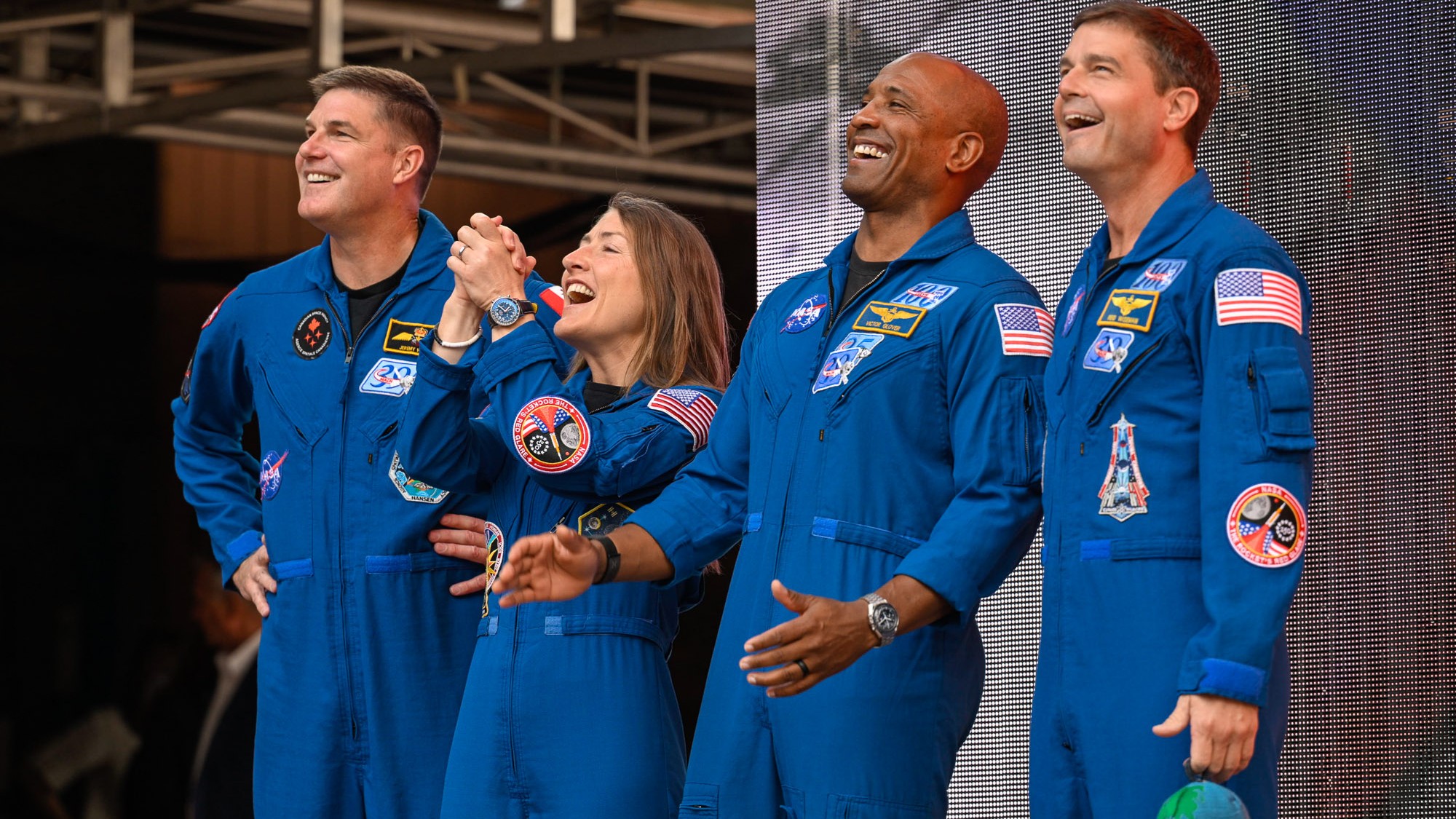
Some 8,500 people packed the open-air venue at Red Rocks to make eye-contact with space travelers Reid Wiseman, commander, Victor Glover, pilot, Christina Koch and Jeremy Hansen as mission specialists – all of them clearly awestruck by the crowd reaction. The event was a broader post-flight campaign for the foursome, also spotlighting the region's contributions to the sojourn of Artemis II. A science, technology, engineering, and mathematics (STEM) fest was also part of the early morning affair.
Iconic location
"I can't imagine a more iconic location on Earth to hear about the trip to the moon," said Robert Lightfoot, president of Lockheed Martin Space and a major aerospace contractor for the Artemis program. There were hundreds of suppliers across the rocky mountain region, over 10,000 employees, that supported the Artemis II mission, he told the gathered throng.
Leadership from industry prime contractors including Lockheed Martin, Amentum, Boeing, L3 Harris and Northrop Grumman took part in the salute to the Artemis II voyage.
Colorado Governor Jared Polis pointed out that "here in Colorado, we're a mile closer to space." As the best and biggest homecoming for the Artemis II crew, he added, "keep reaching for the stars."
Lori Glaze, NASA associate administrator for the Human Spaceflight Mission Directorate, said today "is a truly revolutionary and exciting time for NASA and America's space program. We are going to reach farther. We're going to dream bigger. And we're going to secure America's leadership in deep space exploration and discovery."

What next?
In a pre-event press gaggle, Space.com asked the Artemis II crew members how their Orion spacecraft named Integrity performed and would help the upcoming Artemis III crewed flight in Earth orbit.
"It handled incredibly well," said Reid Wiseman, Artemis II commander. "Just from habitability, I think that is where we learned the most, putting four humans in the spacecraft. We knew that the machine was technically competent and capable of getting to the moon … Artemis I taught us that," he told Space.com.
"We had some heat shield things we needed to sort out on Artemis II. But putting the four of us in there, seeing how the life support system worked and how is it for habitability, to eat, live, work, and sleep in there, we definitely learned a lot that we've handed on to Artemis III," said Wiseman.
Sense of gratitude
The Red Rock Artemis II stage event had the four Artemis II crew members facing a huge gathering of supportive spectators. In excess of 1,300 questions were submitted by the attendees.
The Artemis II crew entrance was marked by roaring footage of the Artemis I launch scored by music from thunderous Metallica's "Fuel."
"The biggest thing that this mission has given us is an overwhelming sense of gratitude. I think we've got to figure out how to keep this going," Glover said.
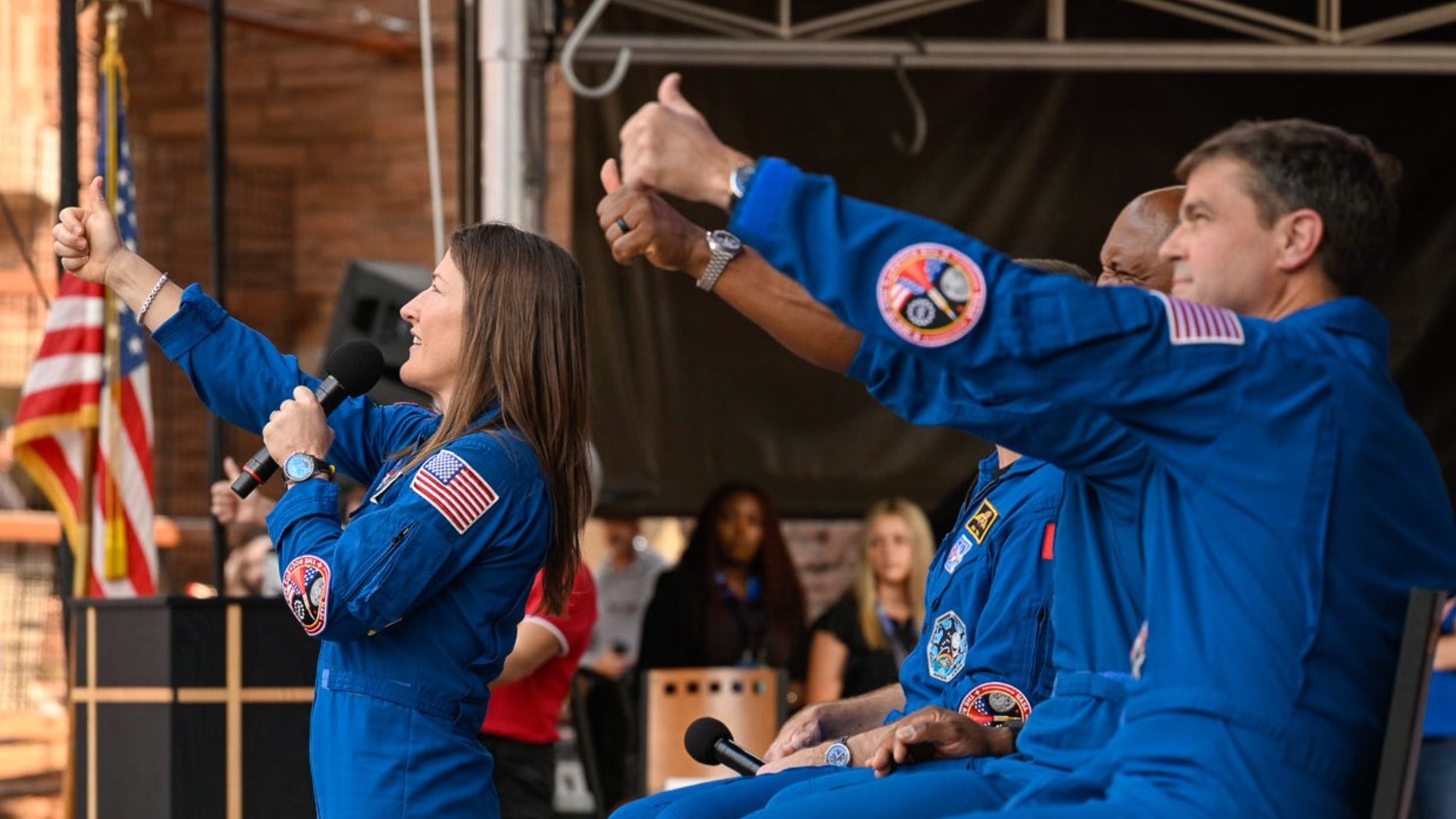
For Christina Koch, the Red Rocks gathering spurred a call and response audience participation. "I say moon, you say joy," to which the throng promptly called back three times. She also asked the audience to put their thumb out in the air. From a distance, "you can cover the entire Earth with your thumb. That's how small it was to us," she said, "but what you knew was that was home."
Proximity operations
Victor Glover, the pilot of Artemis II, focused on a proximity operations demonstration during the flight. That entailed the crew guiding the spacecraft through a series of controlled approach and retreat maneuvers using the detached upper stage, the interim cryogenic propulsion stage, as a reference target.
"That is when we had a chance to fly the spacecraft by hand, not just using the computers," Glover told Space.com. "We actually got to fly. One of the most amazing aspects of that is looking out the window or through the cameras on the [cockpit] displays to determine how far we were from the upper stage," he explained.
That task made use of all four sets of eyes onboard Orion, Glover said. "We did not have radar, or some other type of digital ranging system between us and that vehicle. But the Artemis II team trusted us to fly like that. I'm still blown away by that trust," he said, "and it flew marvelously."
South pole ambitions
NASA's Glaze added that Artemis III is to fly sometime mid-year in 2027.
"We are going to demonstrate docking with one or both of our two landers, the Blue Origin and the SpaceX lander. They've got some demonstration versions that they are preparing right now. We're working on that mission to prove out, not just going back and forth at a target, but actually docking and doing that hard job," Glaze told Space.com.
Space.com pressed Glaze on the term "demonstration versions" of the Blue Origin and SpaceX lunar landers.
Would the fidelity of those demos be good enough to green-light an actual human moon landing on the Artemis IV mission?
"I do," Glaze responded. "We're working really hard with both of our lander providers on development of the demo pathfinder versions of their landers that we will dock with […] to assure that the docking systems are the same docking system we're going to work with when we are going for the landing mission," she said.
Glaze said that "this is one of the key risks. This allows us to buy down that risk and at least work through that part of the mission. So when we do the landed mission we've got that part out of the way.
"We've got our lessons learned from those docking demonstrations. And then we are really focused on all the risks associated with the landing on the moon … we can really focus our efforts there."
According to Space.com sources, however, there is active discussion of whether the lunar south pole is an advisable location for the first human landing of the Artemis Program. Indeed, Artemis II pilot Glover recently stated that he thinks there's a need to be realistic and progressively work our way to the south pole locale rather than land there first.
"We've had a lot of conversations with both of our lander vendors. The designs they have are for the south pole," responded Glaze. "We're working really closely with them on those designs. And we are very focused on landing at the south pole."
Over the moon
Canada's Artemis II mission specialist, Jeremy Hansen, told the audience that their space trek was a very human experience for the four crew members, "but we came to see and feel you. You shared the moon joy," he said.
Hansen underscored the international character of Artemis II. "It was one of those deliberate contributions to the planet," he said, because billions of us on Earth have to join forces. "We have to work together. We can no longer believe that our end-state is not working together. Not acceptable. We have to collaborate," he said.
Asked by a young audience member about items taken on their excursion around the moon, mission specialist Koch replied: "I took handwritten letters that I hadn't read before from my family, and also a very tall cow figurine. My dad had the idea of having a cow jump over the moon."